
Raymore Previous Residents by Era
A backward address search changes tools as the date moves earlier. The Cass County Recorder web index is useful for modern real-estate instruments, but it is not the full county archive. The library’s Cass records guide distinguishes the online index from office and historical collections. A deed shows a transaction or interest in land, not automatic proof that a named person occupied the house. For past residents, pair the deed trail with dated household evidence such as a directory, newspaper item, census schedule, tax record, probate file, or obituary.
| Source | Years It Covers | Where Held | What It Shows |
|---|---|---|---|
| Recorder web real-estate index | 1980-present | Cass County Recorder online index | Recorded instruments, parties, dates, and title clues |
| Recorder office material | 1940-present | Cass County Recorder of Deeds | Real-estate records beyond the web index |
| Deed books and indexes | 1837-1952 | Crouch Library microfilm and related collections | Earlier grantor, grantee, book, page, and land-description leads |
| Older Cass material | 1940 and older | Cass County Historical Society | Deeds, tax books, probate, court, and family-file context |
| History and Directory of Cass County | 1908 | Digitized A.L. Webber volume | A dated Raymore and county directory snapshot |
Start with the web index when the likely transfer is from 1980 forward. For a 1940-1979 gap, ask the Recorder for the relevant real-estate material. Earlier work may require deed books, index microfilm, or an appointment with the Historical Society. The library guide reports no known courthouse fire or massive record destruction, so a missing name calls for a date, spelling, repository, and indexing check before any conclusion is drawn.
Note: A title trail can identify transfers and parcel history, but it cannot alone establish who lived at a Raymore address.
Raymore Recorder Index From 1980
The Cass County Recorder of Deeds records deeds, deeds of trust, releases, assignments, plats, surveys, liens, restrictions, and related instruments. Its online route allows a free registered account or the documented guest path. Search options include grantor, grantee, or both names, with sorting by alphabet, instrument number, or recording date. A name in one of those fields may be a transaction participant, so inspect the instrument type and legal description before calling anyone an owner or a former resident.
The Recorder index entry screen is the source represented by the image. It is a starting point for an instrument search, not a current-household list.
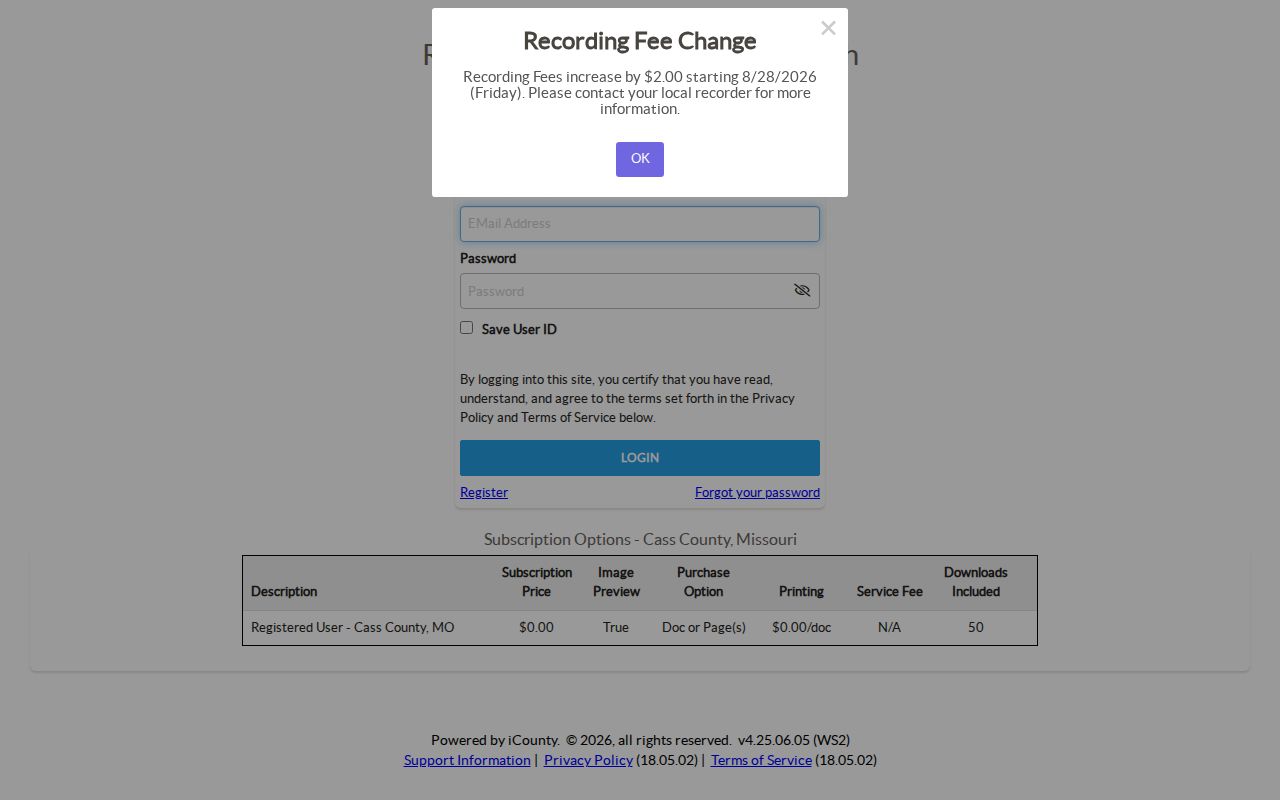
Use the result label, recording date, instrument number, and legal description as research notes. The requested image or a certified copy is the stronger source when a name or property description matters.
The Recorder fee schedule lists regular copies at $1 per page, plat copies at $5, and separate certification charges. Fees depend on page count, document type, and delivery, so confirm the current amount with the office before ordering a copy.
Raymore Previous Residents Before the Web Index
Older previous-residents research needs a repository handoff, not a guess. The Cass library holds deed books A-Z and 1-138 plus deed indexes from 1837 through 1952. The Historical Society holds older deeds and related tax, probate, court, and family materials. The Recorder office provides real-estate material from 1940 forward. Those overlapping paths are useful when an online name search stops at the 1980 coverage line or when an address has changed shape through a plat or subdivision.
The Cass records guide explains the grantor, grantee, and both-name approaches used for older deed work.
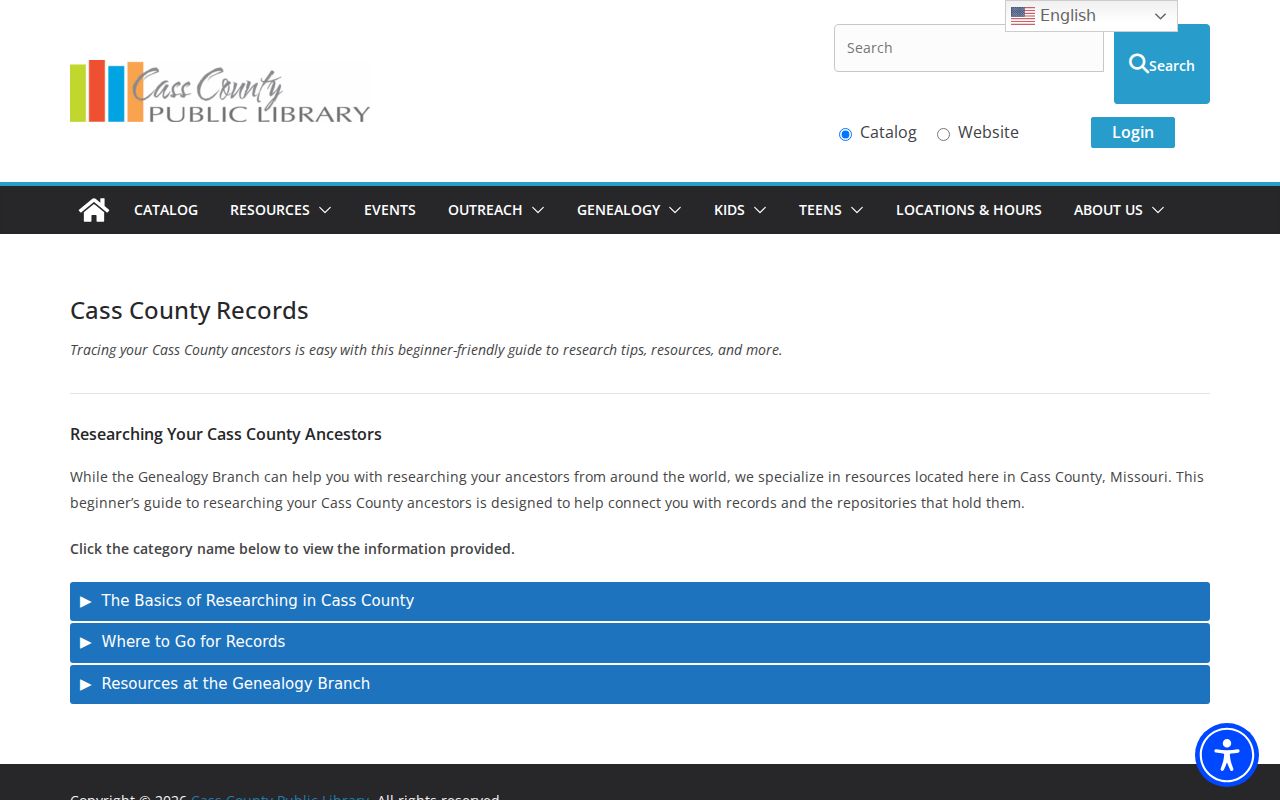
A surname should be checked in both directions, then narrowed by the legal description, plat, lot, block, recording date, or Raymore place label. That criss-cross check helps separate a similar name from the parcel actually being traced.
- Grantor
- The party who conveys or releases an interest in an instrument.
- Grantee
- The party receiving an interest. A grantee entry does not by itself establish residence.
- Chain of title
- The sequence of recorded transfers or interests connected by the same parcel and legal description.
- Legal description
- The lot, block, subdivision, or other formal land description used to distinguish a parcel when street labels change.
Raymore Address History at Crouch
The Mary B.B. Crouch Genealogy Library is the practical bridge between a modern Raymore address and older Cass records. It is in the Cass County Information Center at 400 E Mechanic in Harrisonville, and its genealogy branch specializes in Cass County research. Library microfilm includes historical newspapers, census material, deed books, and deed indexes. Two microfilm readers can scan, save, and print, which makes it possible to preserve the issue date, reel, and page that supports a past-household connection.
The Crouch Genealogy Library provides the local setting for this research.
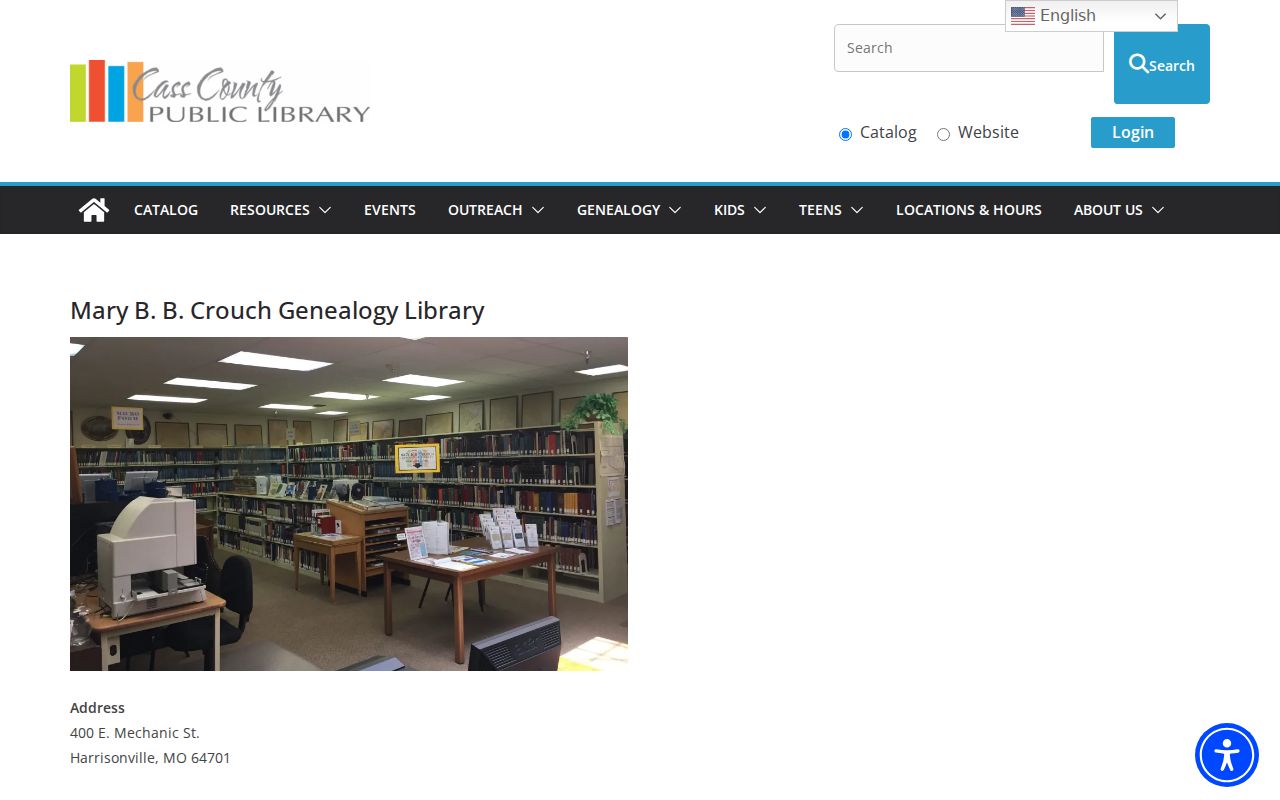
Ask a staff member for the appropriate finding aid, newspaper reel, deed index, or date-specific collection rather than assuming that all historic material is searchable by address.
The library’s genealogy guides also point to local-history, newspaper, microfilm, and database resources. A concise inquiry can name the Raymore address, approximate period, and type of record needed. Staff assistance is subject to capacity and does not promise complete research.
The Cass Library house-history guides identify the local guides and research paths used for a backward address trail.
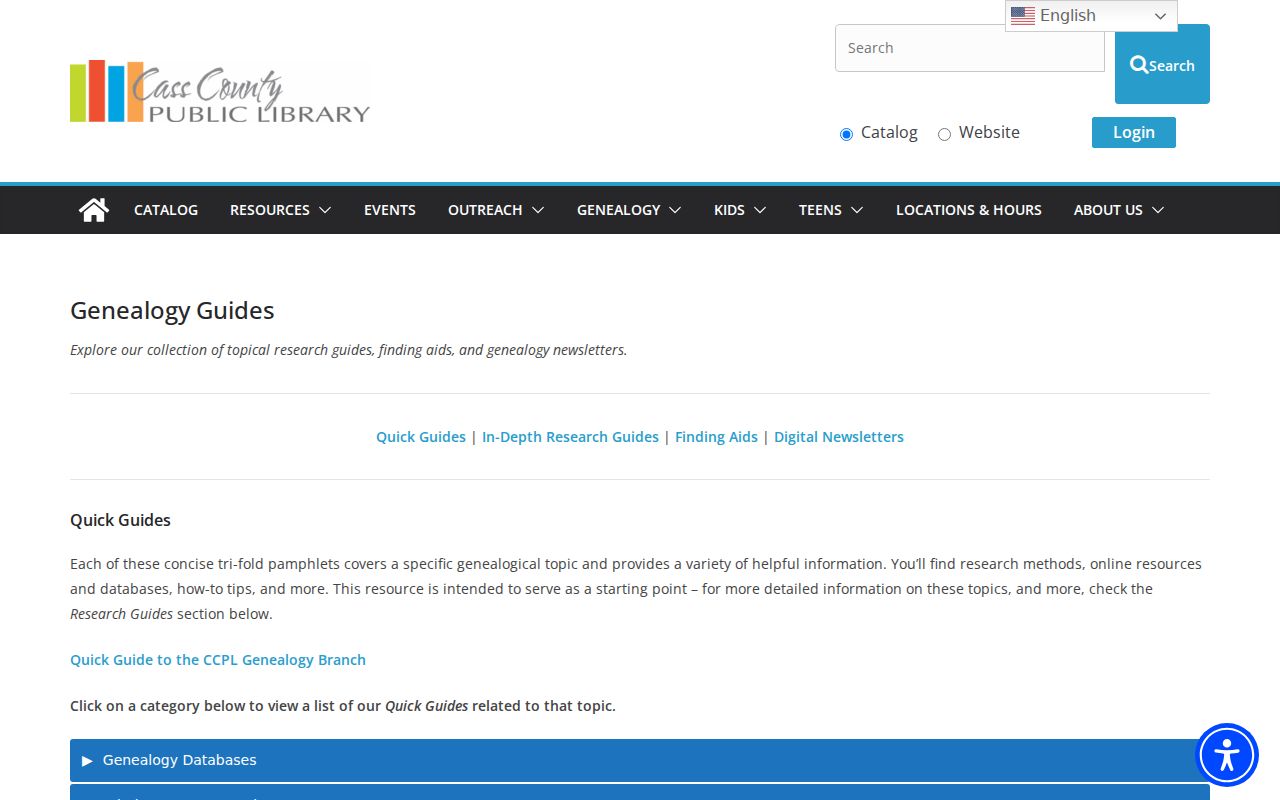
Use a guide to select a collection and preserve the book, reel, folder, page, or image actually reviewed for the address history.
The 1874 Raymore plat, the railroad-era town, and later Maplewood, Bridlecroft, and Silver Lake development mark different address-history periods. A recorded plat is the better source for an original lot or street name; a current map can reflect later parcel layout or addressing.
Trace Raymore Previous Residents Through Deeds
Begin the Cass County deed chain with the property, not a person’s name. The Cass County Assessor real-estate search can narrow a record by house number, street name, city, PIN, deed holder, or legal description. Record the current parcel’s PIN, situs address, legal description, subdivision, lot or block, and the displayed deed holder. A situs address identifies the parcel location. It may differ from a holder’s mailing address, and neither field proves occupancy.
- Locate the parcel and preserve its PIN, legal description, and Raymore situs address.
- Use the current deed holder, legal description, or instrument date in the Recorder index to locate the latest relevant deed.
- Read the deed’s grantor, grantee, instrument type, recording date, and land description rather than relying on a name alone.
- Search the earlier seller as a grantee in the prior period, compare the legal description, and repeat backward one transfer at a time.
- When the web index ends, continue through Recorder office material, library deed books and indexes, or Historical Society collections.
Plats, tax books, probate files, newspaper legal notices, and obituaries can help bridge a dated gap. They still need their own citation and purpose. A parcel split, merge, trust, LLC, or multiple holder is a signal to slow down and compare the legal description rather than treating the current street label as permanent.
Note: Keep each transfer in date order and retain the record source, because an address label may change while the legal description persists.
Raymore Previous Residents in 1908
The fully digitized A.L. Webber History and Directory of Cass County, Missouri is a confirmed historical snapshot. It has a Raymore chapter around page 353, a general directory around page 366, and a county directory around page 372. Its 408 pages were published by the Cass County Leader. It can support a dated historical name, business, or community connection. It does not establish an annual Raymore city-directory run or prove occupancy outside 1908.
Pair the book with the correct census period, newspaper issue, deed, tax record, or probate item. Federal census material is available through library and genealogy resources subject to the 72-year public-release rule; the 1950 census is the latest released decennial census. A household match is stronger when two independent records agree on name, date, and place.
Raymore’s historical labels matter. A source may describe a village, township, postal place, or the modern city. Search variant spellings, original plat or street names, and the surrounding county context when an address does not appear as expected.
Household Evidence for Raymore Previous Residents
Ownership is only one layer of who lived here before. CCHS maintains obituary and marriage indexes, probate files, tax records, deeds, court documents, family files, and early school records. Its archive research is by appointment at 400 E Mechanic, Suite 203, Harrisonville. The archive page lists an obituary and marriage copy price of $7.50, while an older library guide shows $5, so confirm the current charge before requesting a copy.
The Cass County Historical Society archive describes the indexes, holdings, appointment route, and copy-request process.
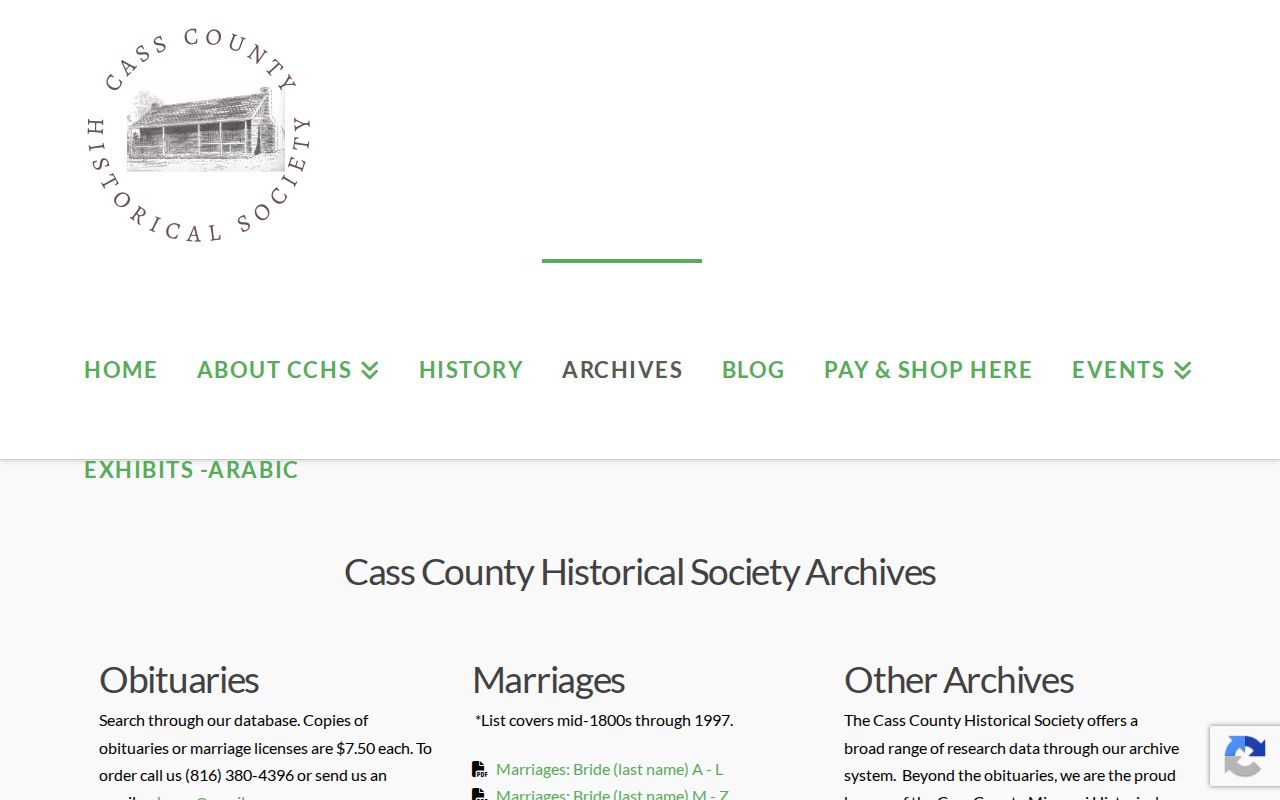
An obituary, probate file, tax book, or newspaper notice can corroborate a dated household trail, but a mention of a person should remain in the source’s stated context. No official Raymore annual directory collection or verified reverse-directory run was located.
The Raymore Directory Book provides the broader collection context. An address trail should instead stay with one parcel and its dated household evidence.
Raymore Address Clues in Microfilm
Newspaper material can supply a dated bridge when a deed index has no image or when a household trail needs a second source. Crouch Library microfilm reaches Cass County newspapers as early as 1872. Its listed runs include the Cass County Democrat from 1881 through 1956, the Democrat-Missourian from 1957 through 2017, and a local Raymore Journal run from January 3, 2001 through December 28, 2002. The State Historical Society directory separately lists the Raymore Journal from 1992 forward, with reel or interlibrary availability varying by year.
Search a name with a year, original plat or street label, subdivision name, township, county tax term, or obituary clue. Preserve the title, issue date, page, and reel. A publication address is not necessarily a residence, so use the item with a deed, directory, tax, census, or probate record before joining it to an address.
Note: A no-hit search may reflect an unindexed issue, a spelling variant, a rural label, or a date outside the available run.
Limits on Raymore Previous Residents Research
Past residents records should remain dated and narrow. The Assessor’s deed-holder field, an old directory entry, a voter record, or a court caption each has a different purpose. Do not convert any one of them into a claim about current occupancy. A public voter lookup requires exact registered information and is not a street-wide directory. Protected voter addresses and Missouri Safe at Home substitute addresses must not be pursued or republished.
For a full present-day street record chain, the Raymore Street Directory keeps that broader address task separate. A one-address backward trail remains strongest when every name, parcel, date, and source is preserved without filling gaps through assumption.